 Holy Bible Online
Levi was one of the twelve sons of Jacob and Leah. From him came the Tribe of Levi, one of the twelve tribes of Israel. The Levites did not receive a territory of their own, because they were set apart to serve God in worship, caring for the tabernacle and later the temple. Levi’s legacy and that of his descendants was the priesthood and spiritual service. Levi died in Egypt before the Exodus.
Levi was the third son of Jacob and Leah. Jacob, also called Israel, is the patriarch of the Israelite people, and his twelve sons became the ancestors of the twelve tribes of Israel. Levi’s brothers included Reuben, Simeon, Judah, Issachar, and Zebulun, who were sons of Leah, as well as other sons of Jacob by Rachel, Bilhah, and Zilpah, such as Joseph and Benjamin.
Levi lived in a family environment marked by conflicts, rivalries, and difficult choices. One notable episode in his life occurred when he and his brother Simeon avenged the violation of their sister Dinah by attacking the city of Shechem. This violent act was strongly criticized by Jacob, who feared retaliation and later condemned their behavior.
Despite this, Levi’s descendants played a central role in biblical history. The Tribe of Levi was set apart by God for the priesthood. Unlike the other tribes, the Levites did not receive their own land when they entered Canaan. Their inheritance was service in the tabernacle and later in the temple.
Within the Tribe of Levi arose the family of Aaron, from whom the priests descended, while the other Levites assisted in religious duties.
Levi had several sons, including Gershon, Kohath, and Merari, who became the founders of the main Levitical clans. Centuries later, Moses, the leader of the Exodus, and Aaron, the first high priest, were born from this tribe.
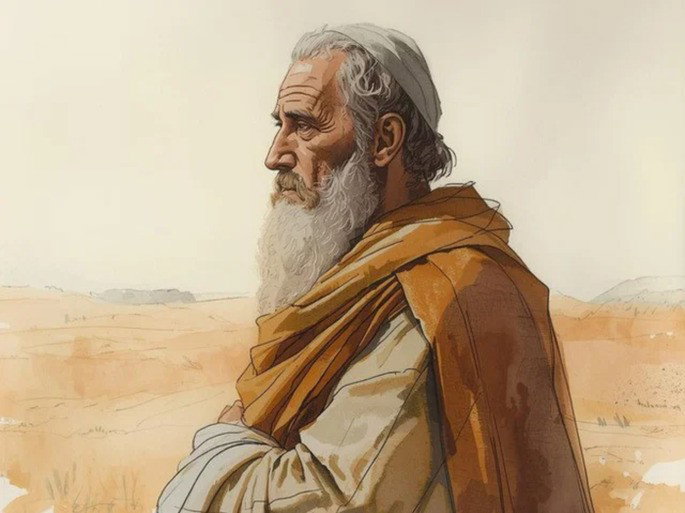
Levi died in Egypt before the deliverance of the people of Israel from slavery. The tribe that bore his name became a symbol of dedication, service, and closeness to God, exerting a lasting influence on the faith and religious organization of Israel.
Bible Study on Levi
The Tribe of Levi
Unlike the other tribes of Israel, the Tribe of Levi was chosen by God for sacred service. After the incident of the golden calf in the wilderness, the Levites stood with Moses, demonstrating their faithfulness to God. Because of this, they were set apart to care for the tabernacle, the sacred furnishings, and the teaching of the Law.
The Tribe of Levi did not receive its own territory in the division of the Promised Land. Their inheritance was the Lord Himself, and they lived scattered among the other tribes, supported by offerings and tithes. From within the Tribe of Levi came the family of Aaron, from whom the priests descended. These priests were responsible for offering sacrifices and serving as religious mediators for the people.
The Levites played an essential role during the Exodus, the wilderness journey, and the period of the kings. They served in the Temple in Jerusalem through music, teaching, and the administration of worship.
The legacy of the Tribe of Levi is one of devoted service to God, the preservation of faith and the Law, and the central importance of worship in the life of Israel.
The Sons of Levi
Levi had three sons: Gershon, Kohath, and Merari. They became the founders of the three main clans of the Tribe of Levi, each responsible for different duties related to the tabernacle.
The descendants of Gershon were responsible for the curtains, coverings, and tent fabrics of the tabernacle, transporting and assembling these parts during Israel's journey through the wilderness.
The descendants of Kohath were entrusted with the most sacred responsibilities: carrying the holy objects, such as the Ark of the Covenant, the table of the bread of the Presence, and the lampstand, but only after these items had been covered by the priests. Moses, Aaron, and Miriam descended from this clan. Aaron and his sons were chosen to serve as priests.
The descendants of Merari were responsible for the structural components of the tabernacle, including the frames, pillars, and bases.
Together, the sons of Levi and their descendants ensured the proper functioning of worship and the preservation of devotion to God, leaving a legacy of service, responsibility, and spiritual dedication.
Levi and the Revenge for Dinah
Dinah, Levi's sister, was violated by Shechem, the son of Hamor, a local ruler. Afterward, Shechem wanted to marry Dinah, and his father attempted to make an agreement with Jacob's family. Outraged by what had happened, Levi and his brother Simeon decided to act deceptively. They demanded that all the men of the city be circumcised, claiming that this would allow the marriage and unite the two peoples.
While the men of Shechem were weakened from the circumcision, Levi and Simeon attacked the city, killing all the men and plundering it. Jacob strongly rebuked his sons, fearing retaliation and condemning their excessive violence. Later, Jacob criticized this act again in his final blessing.
The revenge for Dinah's dishonor demonstrates a concern for family honor, but according to the biblical account, it also teaches that violent and deceitful vengeance brings consequences and does not reflect God's will.
Levi, Son of Jacob and Leah
Levi was the son of Jacob and Leah. Leah, who felt less loved than Rachel, saw Levi's birth as a hope for a closer bond with Jacob, since his name is associated with the idea of "attachment" or "union." Jacob was the patriarch of Israel, and his twelve sons became the ancestors of the twelve tribes of the Israelite people.
Levi grew up in a family environment marked by rivalry among brothers and tension between Jacob's wives. He was the brother of Reuben, Simeon, Judah, Issachar, and Zebulun, all sons of Leah, and the half-brother of Joseph, Benjamin, and others. One of the most notable events involving Levi was his alliance with Simeon to avenge the dishonor of their sister Dinah, an action that Jacob condemned because of its violence.
Despite these conflicts, Levi's lineage was transformed over time. His descendants were chosen by God to serve Him, demonstrating that in the Bible, God's purposes can redirect family histories marked by human failures.
What We Learn from the Story of Levi
Levi's story speaks of human failure, transformation, and purpose. In his youth, Levi is portrayed as being involved in actions marked by impulsiveness and violence, especially in the episode of revenge against the city of Shechem. This event reveals how anger and the desire to take justice into one's own hands can lead to negative consequences and condemnation, even within one's own family.
However, Levi's story does not end with that mistake. Over time, his descendants took on a completely different role. The Tribe of Levi was chosen by God for sacred service, demonstrating that the past does not determine the future. God can transform lives marked by failure into instruments of blessing and service.
We also learn about spiritual responsibility. The Levites did not receive land as an inheritance; instead, they devoted themselves to caring for the faith, teaching God's law, and leading worship. This teaches that a person's true legacy is not found in power or possessions, but in living with purpose, faithfulness, and obedience.
Levi's story shows that God corrects, redirects, and calls imperfect people to fulfill greater purposes.