 Holy Bible Online
Silas, also known as Silvanus, was an important leader in the Early Church and one of the Apostle Paul's main companions. Silas was present at the Jerusalem Council and accompanied Paul on missionary journeys. His story is recorded in the Book of Acts and in some of the New Testament epistles. Although the Bible does not provide details about his death, Silas left a remarkable legacy of perseverance and commitment to Christ.
Silas was one of the respected leaders of the church in Jerusalem. He was regarded as a trustworthy man, full of faith, and well respected among the believers. His name first appears in Acts 15 during the events surrounding the Jerusalem Council.
At that time, Christians were debating whether Gentile converts needed to follow all Jewish laws in order to be saved. After much prayer and discussion, the apostles and church leaders concluded that salvation comes by God's grace through faith in Jesus Christ.
To communicate this decision to the churches outside Jerusalem, Silas was chosen along with Judas Barsabbas to carry an official letter from the Jerusalem church to Antioch. This mission demonstrated the trust the apostles placed in him and marked the beginning of his broader role in spreading the Gospel.
After completing his mission in Antioch, Silas remained among the believers, strengthening the church through teaching and preaching. It was in this context that his path became more closely intertwined with that of the Apostle Paul.
When Paul decided to begin his second missionary journey, a disagreement arose between him and Barnabas regarding the participation of Mark. As a result, Barnabas sailed to Cyprus with Mark, while Paul chose Silas to accompany him. From that moment on, Silas became one of the principal co-workers in Paul's ministry.
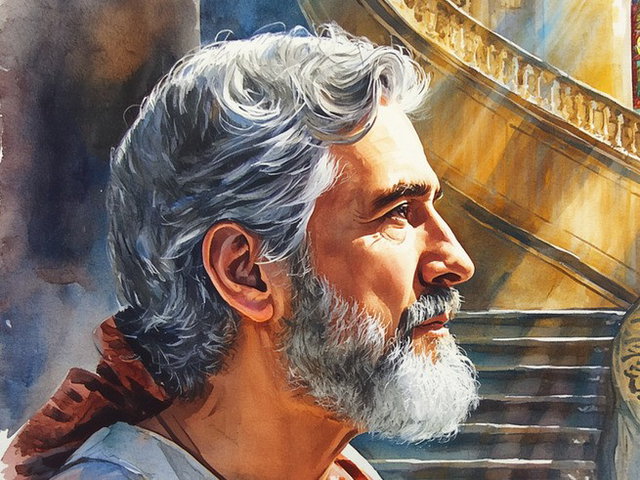
Throughout the missionary journeys, Silas faced challenges, persecution, and hardships, yet he remained faithful to God's calling. His story reveals a man committed to the work of the Lord and willing to serve even in the face of the greatest obstacles.
Notable Events in the Life of Silas
- Jerusalem Council: Silas was chosen as a representative of the church to deliver the apostles' decision to Gentile Christians.
- Companion of Paul: He was selected to accompany Paul on his second missionary journey.
- Evangelism in Macedonia: He preached the Gospel in cities such as Philippi, Thessalonica, and Berea.
- Imprisonment in Philippi: He was imprisoned and beaten alongside Paul for proclaiming the Gospel.
- Miracle in Prison: He witnessed the earthquake that opened the prison doors and led to the conversion of the jailer.
- Ministry in Corinth: He assisted Paul in strengthening the local church.
- Mention in Apostolic Letters: He is referred to by both Paul and Peter as a faithful co-worker.
Bible Study on Silas
Silas at the Jerusalem Council
The Jerusalem Council was one of the most important events in the Early Church. There were questions about whether Gentile Christians needed to obey the Jewish ceremonial laws in order to be saved.
After the gathering of the apostles and church leaders, it was concluded that salvation did not depend on observing the Law of Moses but on God's grace through faith in Jesus Christ. To communicate this decision, Silas and Judas Barsabbas were sent to Antioch carrying an official letter.
In addition to delivering the message, Silas encouraged the believers with words of spiritual strengthening. His role in this event demonstrated his maturity, leadership, and credibility within the Church.
By participating in this historic moment, Silas helped preserve unity between Jewish and Gentile Christians, contributing to the healthy expansion of the Gospel.
Silas and the Missionary Journey with Paul
After the separation between Paul and Barnabas, Silas was chosen to accompany Paul on his new missionary journey. Together, they traveled through various regions, proclaiming the good news of Jesus Christ.
During this journey, they visited established churches and founded new Christian communities. In Lystra, they met Timothy, who also became part of the missionary team.
Silas participated in the evangelization of Macedonia after Paul received a vision of a Macedonian man pleading for help. This calling led the group to strategic cities such as Philippi, Thessalonica, and Berea.
Throughout the journey, Silas demonstrated a willingness to serve, teach, and suffer for the Gospel. His work helped strengthen churches and spread the Christian message into new regions of the Roman world.
The Imprisonment of Paul and Silas in Philippi
One of the most well-known episodes in Silas's life took place in Philippi. After Paul cast an evil spirit out of a slave girl who earned money for her owners through fortune-telling, her owners became furious and reported Paul and Silas to the authorities.
Without a fair trial, both men were publicly beaten and thrown into prison. Their feet were fastened in stocks, making their situation even more painful.
Despite their suffering, Paul and Silas spent the night praying and singing hymns to God. The other prisoners listened attentively to their songs and testimony of faith.
Around midnight, a great earthquake occurred. The prison doors flew open, and the prisoners' chains came loose. The jailer, believing that all the prisoners had escaped, prepared to take his own life.
However, Paul shouted that no one had escaped. Amazed by what had happened, the jailer asked what he needed to do to be saved. The answer was clear: “Believe in the Lord Jesus, and you will be saved, you and your household.”
That very night, the jailer and his family received the message of the Gospel and were baptized. This episode demonstrates how God can transform situations of suffering into opportunities to reach lives with His grace.
The Ministry of Silas
After leaving Philippi, Paul and Silas continued proclaiming the Gospel in various cities. In Thessalonica, they faced opposition, but many people believed in the message of Christ.
In Berea, they found people who examined the Scriptures daily to verify the teachings they received. The Bereans became an example of devotion to God's Word. Silas remained there for a time, helping with the missionary work while Paul traveled to other regions.
His name appears again in Corinth, where he assisted in strengthening the local church.
In addition to the Book of Acts, Silas is mentioned in Paul's letters to the Thessalonians and also in Peter's First Epistle, where he is described as a faithful brother.
How Did Silas Die?
The Bible does not record how Silas died. After his final mentions in the New Testament, there are no biblical accounts describing the details of the end of his life.
Some early Christian traditions suggest that he died a natural death, while others associate his death with martyrdom. However, these claims cannot be confirmed by Scripture.
What the Bible does make clear is that Silas was a faithful servant who dedicated his life to proclaiming the Gospel. His legacy is not found in the way he died, but in the way he lived for Christ.
What Can We Learn from Silas?
The story of Silas teaches us that even while facing persecution, imprisonment, and hardship, he remained faithful to God's calling.
Silas was chosen for important missions because he was willing to serve wherever he was needed. Faithfulness opens the door to greater responsibilities. His role in the Jerusalem Council demonstrated spiritual maturity and prepared him for even greater challenges.
Even while imprisoned in Philippi, Silas chose to praise God rather than give in to fear. Suffering can become a powerful testimony. What appeared to be a defeat, the prison, became the setting for the conversion of the jailer and his entire household.
Silas worked alongside Paul, Timothy, and other leaders, demonstrating the importance of unity in Christian service. Courage strengthens the church. His example inspired other believers to remain steadfast in the face of persecution.
Silas's missionary work contributed to the growth of the Church throughout many regions of the ancient world. His true legacy is a life of faithfulness to God.