 Holy Bible Online
Jonathan had every reason to become the next king of Israel. He was Saul’s eldest son and the natural heir to the throne. But he made a different choice: he recognized that God had chosen David to reign and helped David get there, even though it cost him his relationship with his own father. His story became marked by courage in battle and one of the best-known friendships in the Bible.
While Saul acted out of fear and impulsiveness, Jonathan was balanced and courageous. He lived during a time of constant wars against the Philistines and growing tension within the royal family itself, as Saul drifted away from God.
Jonathan was highly respected by the people because of his military victories and his character. He gained a strong reputation when he attacked a Philistine outpost with only his armor-bearer beside him. Before the battle, he declared that God could save “by many or by few,” demonstrating trust in the Lord. This event marked the beginning of his reputation as a brave warrior and a man of faith.
While Saul consistently acted out of fear and impulsiveness, Jonathan thought before acting and relied on God in every decision. He lived during a period marked by constant wars against the Philistines and conflicts within the royal family, especially when Saul became consumed by jealousy and disobedience toward the Lord.
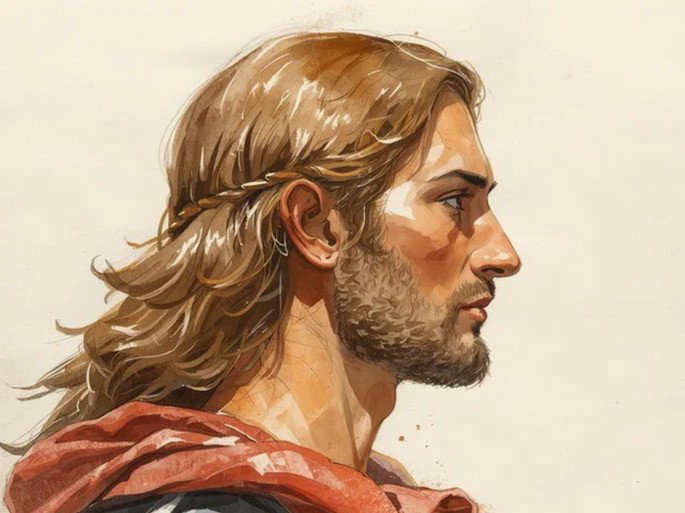
Jonathan’s story ends tragically during a battle against the Philistines on Mount Gilboa. He died alongside his father and brothers, bringing to a close a life marked by courage, friendship, and faithfulness. Even though he had reasons to compete for the throne, Jonathan chose to honor God’s will and preserve his friendship with David above personal ambition.
Bible Study on Jonathan
The Friendship Between Jonathan and David
The friendship between Jonathan and David began after David’s victory over Goliath. The Bible says that “Jonathan’s soul was knit to David’s soul,” describing a deep bond of friendship:
And it came to pass, when he had made an end of speaking unto Saul, that the soul of Jonathan was knit with the soul of David, and Jonathan loved him as his own soul.
- 1 Samuel 18:1 (KJV)
Even though he was a prince and heir to the throne, Jonathan did not see David as a threat. He recognized that God was with David. In a gesture full of meaning, he gave David his robe, sword, bow, and belt. For a king’s son, giving these things was like saying, without words: the throne is yours.
And Jonathan stripped himself of the robe that was upon him, and gave it to David, and his garments, even to his sword, and to his bow, and to his girdle.
- 1 Samuel 18:4 (KJV)
Their friendship was built on trust, loyalty, and reverence for the Lord. Jonathan protected David even knowing it could place him in conflict with his own father.
When Saul began pursuing David, Jonathan risked his position and safety to help him escape. On several occasions, he tried to persuade Saul to abandon his hatred and recognize David’s innocence. Their relationship shows that true friendships are not built on personal interests, but on loyalty and love.
Father and Son: The Relationship Between Jonathan and Saul
Jonathan loved and respected Saul as both father and king of Israel, but he lived with deep inner conflict because of the king’s increasingly unstable behavior. On many occasions, Jonathan had to choose between family loyalty and faithfulness to God’s will.
Saul became consumed by jealousy when he realized David was winning the people’s affection. This led the king to view David as a threat to his throne and make impulsive decisions. Jonathan, however, strongly disagreed with this attitude, because he recognized that God had chosen David to rule Israel and saw him not as an enemy, but as someone raised up by the Lord.
This disagreement grew even stronger when Saul demanded that Jonathan stand against David. In one such situation, Saul became furious after learning that Jonathan had protected David and warned him about assassination plans. Saul even insulted his own son, accusing him of betrayal for supporting David, exposing the growing divide in perspective between father and son.
Even while disagreeing with his father, Jonathan never conspired against him or stopped honoring him. He tried to act as a mediator, defending David’s innocence and seeking to calm the king’s heart. Jonathan directly interceded for David, reminding Saul of the victories David had won for Israel and urging the king not to shed innocent blood.
Even though he disagreed with his father’s actions and suffered rejection because of it, Jonathan maintained respect and self-control. He did not abandon his spiritual convictions or break with his family, demonstrating faithfulness to God without losing honor.
Why Was Jonathan Condemned to Death?
During a battle against the Philistines, Saul made a rash oath, forbidding any soldier from eating before the battle was over. Jonathan did not hear his father’s command and ate some honey he found along the way (1 Samuel 14:25–27).
After the victory, Saul discovered that Jonathan had broken the oath and declared that he should die because of it. Even though Jonathan was his son, Saul insisted that the punishment should be carried out. However, the people intervened on Jonathan’s behalf. The Israelites recognized that God had given victory through him and prevented Saul from putting him to death.
This episode reveals how Saul was becoming increasingly unstable and paranoid. At the same time, it highlights the people’s recognition of Jonathan’s courage and faithfulness.
The Death of Jonathan
Jonathan, Saul’s son, died during the battle against the Philistines on Mount Gilboa, as recorded in 1 Samuel 31 and 1 Chronicles 10. He fought alongside his father and brothers in a confrontation between the army of Israel and the Philistines. The battle ended tragically for Israel, which was defeated.
The Bible reports that the Philistines pursued the Israelite soldiers, and many were killed on Mount Gilboa. Saul was also severely wounded and ultimately took his own life to avoid being captured. Jonathan died on the same day as his father, along with his brothers Abinadab and Malchi-shua, bringing Saul’s dynasty to a tragic end.
Jonathan’s death had a profound impact, especially on David, his close friend. When David received the news, he wrote a song of mourning, praising the courage of Saul and Jonathan and expressing his grief over the loss of their friendship (2 Samuel 1:17–27).
Lessons from Jonathan’s Story
Jonathan’s life is uncomfortable to consider because he loses. He loses the throne, loses his father, and loses his life. Yet the Bible tells his story as a victory, not a defeat. Three lessons stand out for readers today.
Honoring your father does not mean agreeing with your father. Jonathan did not pretend Saul was right. He confronted his father, defended David before him, and exposed the king’s injustice. Yet he continued treating Saul as his father, even while disagreeing with his actions. There is a difference between blind obedience and honoring authority. Jonathan lived out that difference.
Loyalty does not depend on who appears to be winning. When Jonathan made a covenant with David, David was a fugitive. Saul was still king. By human reasoning, standing with David seemed like backing the losing side. Jonathan made that choice because he trusted the one God had chosen, not the one who held power at that moment.
Some losses are worth more than gains. Giving up the throne was the greatest decision of Jonathan’s life, and he did not make it out of weakness. He made it because he understood that being in the right place, on the right side, matters more than being in the highest position. That is the invitation Jonathan’s story leaves for readers today.
See also: