 Holy Bible Online
Goliath was a Philistine warrior from the city of Gath, known for his immense strength and extraordinary size. The Bible describes him as a "champion" of the Philistines, trained for warfare from his youth. He is best known for his role during the reign of King Saul and for demonstrating how God used David, a young shepherd, to defeat a giant who stood about nine feet nine inches (2.9 meters) tall and seemed impossible to overcome.
Israel was at war with the Philistines. The two armies were positioned on opposite sides of a valley when Goliath began challenging Israel. For forty days, he came forward before the Israelite army to taunt the soldiers and demand that someone fight him. The challenge represented the outcome of the war itself: if Goliath won, Israel would become servants of the Philistines; if he were defeated, the Philistines would serve Israel.
The giant terrified the people because of his appearance and strength. Not even Saul, who was both king and warrior, had the courage to face him. To the Israelites, Goliath appeared invincible.
In the midst of this humiliating situation, David entered the story. Still a young man, he worked as a shepherd and was sent by his father to the battlefield to bring food to his brothers, who were serving in Saul's army. When he heard Goliath's insults against Israel and against God, David was outraged and decided to confront the giant.
Although he was only a youth and had no military experience, David trusted that God would give him victory. Refusing Saul's armor, he went into battle carrying only a sling and five smooth stones. When Goliath mocked him, David replied that he came in the name of the Lord of Hosts.
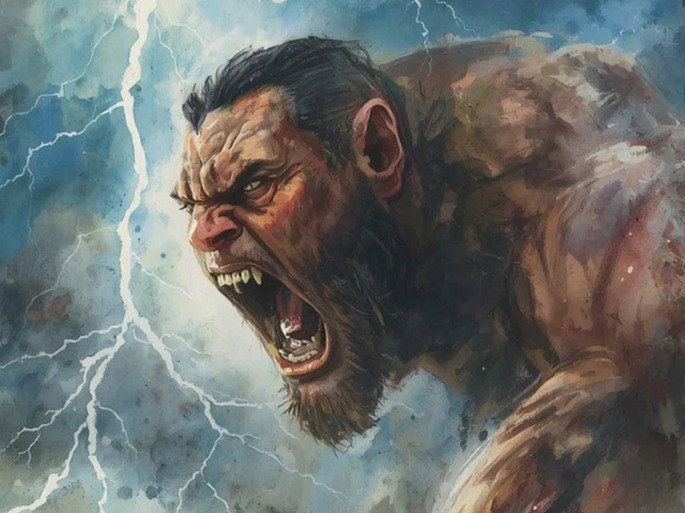
At the moment of the confrontation in the Valley of Elah, David launched a stone from his sling and struck Goliath in the forehead. The giant fell to the ground before all the people, and David won the battle. Goliath's defeat demonstrated the extraordinary power of God, showing that it was the Lord who had given Israel this great victory.
After this triumph, David became known throughout the kingdom, beginning the journey that would eventually lead him to the throne of Israel. The story of Goliath became a symbol of overwhelming challenges, while David came to represent courage, faith, and trust in God in the face of adversity.
Bible Study on Goliath
How Tall Was Goliath?
Some Bible translations state that Goliath was "six cubits and a span" tall. Depending on the measurement used, this corresponds to approximately 9 feet 9 inches (2.9 meters). This is why he became known as "the giant":
A champion named Goliath, who was from Gath, came out of the Philistine camp. His height was six cubits and a span.
- 1 Samuel 17:4
In addition to his remarkable height, Goliath wore heavy bronze armor, a bronze helmet, and bronze shin guards, and carried an enormous spear. According to 1 Samuel 17, his bronze helmet and coat of scale armor weighed about 125 pounds (57 kilograms), and the iron point of his spear weighed about 16 pounds (7.2 kilograms).
Considering both his height and the weight of his armor, Goliath was an intimidating warrior, especially since the average height of a man during the Bronze Age was around 5 feet 3 inches (1.6 meters). Humanly speaking, no one believed he could be defeated.
Who Were the Philistines?
The Philistines were among Israel's main enemies in the Old Testament. They lived along the coastal region of Canaan and controlled fortified cities such as Gaza, Ashdod, Ekron, Ashkelon, and Gath.
The Philistines frequently went to war with the Israelites, competing for territory and political control. They were also known for their military strength and their skill in manufacturing iron weapons.
During David's time, the Philistines represented a constant threat to Israel. Goliath appeared in precisely this context of war and tension between the two nations.
The Challenge in the Valley of Elah
The confrontation between Israel and the Philistines took place in the Valley of Elah. The two armies were camped on opposite sides of the valley. On one side stood the Israelites, led by King Saul; on the other were the Philistines. Every morning and evening, Goliath came down into the valley to challenge Israel.
The giant shouted before the soldiers: "Am I not a Philistine, and are you not the servants of Saul? Choose a man and have him come down to me. If he is able to fight and kill me, we will become your subjects." (1 Samuel 17:8–9). For forty days, this challenge continued without anyone accepting it.
Fear spread throughout the Israelite army. Not even Saul responded to the challenge, even though the Bible says he was the tallest man among the people (1 Samuel 9:2). Saul seemed the most likely person to face Goliath, yet even he shrank before the giant.
When David arrived at the camp and heard Goliath's words, he saw the situation differently. To the Israelite soldiers, the problem was the giant's size and strength. But David perceived something deeper: Goliath was mocking God's people and treating the Lord as though He were unable to save Israel.
That is why David asked: "Who is this uncircumcised Philistine that he should defy the armies of the living God?" (1 Samuel 17:26). In David's view, the battle was not merely a military contest. The giant was dishonoring God's people, and that is what stirred the young shepherd's courage.
While everyone else looked at Goliath and saw an impossible enemy, David looked to God and believed that the Lord was greater than any threat. Therefore, David accepted the challenge.
How David Killed Goliath
David defeated Goliath using only a sling and a stone. At the moment of confrontation, he ran toward the giant, hurled a stone, and struck the Philistine warrior in the forehead. Goliath immediately fell to the ground. David then took the giant's own sword and killed him before the armies of Israel and the Philistines.
This battle took place when David was still a young shepherd. He was not part of the Israelite army but cared for the flocks of his father, Jesse. One day, Jesse sent David to the Israelite camp to bring food to his brothers, who were serving in the army of King Saul.
When David arrived at the battlefield, he found a scene of fear and discouragement. For forty days, Goliath had come before the Israelites, challenging someone to fight him, yet no one accepted the challenge. The giant mocked the people of Israel and treated the God of Israel with contempt. While the soldiers were terrified, David was outraged by what he heard.
David decided to face Goliath. When he told Saul, many doubted him because of his youth and lack of military experience. Nevertheless, David explained that God had already delivered him from danger while he was tending sheep, protecting him from lions and bears. David believed that the same God who had helped him in the past would give him victory over the Philistine giant.
Saul allowed David to go into battle and offered him his armor, but David refused because he was not accustomed to fighting that way. Instead of carrying a sword and heavy armor, he took only his staff, his sling, and five smooth stones gathered from a stream.
When Goliath saw David approaching, he mocked him for being young and seemingly weak. However, David replied that he was not trusting in weapons or human strength but in the name of the Lord of Hosts.
Then came one of the most famous moments in the Bible: David launched a stone from his sling, struck Goliath in the forehead, and defeated the warrior who seemed impossible to overcome. When the Philistines saw that their champion had fallen, they fled the battlefield, and Israel won a great victory.
What Happened Next: The Head, the Sword, and the Legacy
After the victory in the Valley of Elah, David took Goliath's head to Jerusalem (1 Samuel 17:54). At that time, Jerusalem was not yet under Israelite control. The city remained under the rule of the Jebusites and would not be conquered until many years later, when David became king (2 Samuel 5:6–9).
After defeating the giant, David kept Goliath's sword. Years later, when he was fleeing from Saul's persecution, David went to the sanctuary at Nob and asked the priest Ahimelech for a weapon. The only sword available was Goliath's. The sword of the defeated giant became the weapon of Israel's future king during one of the most difficult periods of his life.
Goliath's story did not end with his death. In 2 Samuel 21:15–22, the Bible records that other giants from Gath, relatives of Goliath, continued to fight against Israel. One of them, named Saph, was killed by Sibbecai. Another giant warrior, Lahmi, was defeated by Elhanan. The text also mentions an enormous man who had six fingers on each hand and six toes on each foot, a total of twenty-four digits, who was killed by Jonathan.
These accounts show that Goliath was not an isolated case. There was a family of giants in Gath known for their strength and the fear they inspired in battle. Yet, over time, all of them were defeated.
Why David's Victory Over Goliath Matters
David's victory over Goliath was more than just a battle won. It was a contest between representatives: whoever won, their entire people would share in the victory. More than that, it was a confrontation between two different sources of trust. Goliath trusted in his strength, his size, his armor, and his weapons. David trusted in the Lord. When the stone struck the giant's forehead, it was faith in God that triumphed before everyone watching.
This victory did not occur to glorify David's strength but to demonstrate God's power before both Israel and the Philistines. The armies of both nations stood there witnessing the event. The living God, whom Goliath had openly challenged, answered through the hand of a teenage shepherd.
In the New Testament, Jesus is called the "Son of David." This title refers not only to the family line from which Jesus Christ came. David also serves as a picture of what Christ would accomplish: a king who confronts the enemy of his people and wins on their behalf. Just as David faced Goliath while Israel stood helpless at a distance, Jesus confronted sin and death when humanity could not overcome them on its own. The shepherd's victory over the giant points forward to the greater victory of the King of kings.
It was after this confrontation that David began his journey toward the throne of Israel. Yet the true meaning of the story is not found in David's rise to power, but in the God who chose a young shepherd to show Israel and the nations who was truly fighting for His people. The giant fell not because of David's strength, but because the Lord was with him.
See Also