 Holy Bible Online
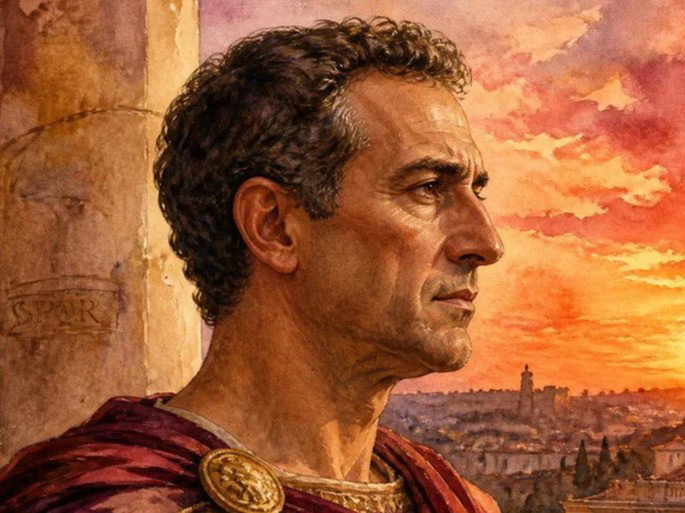
Pontius Pilate was the Roman governor of Judea who authorized the condemnation of Jesus to death by crucifixion. Although he repeatedly declared that he found no guilt in Jesus, Pilate eventually gave in to pressure from the crowd and the religious leaders. In a symbolic gesture, he washed his hands before the people to declare that he did not consider himself responsible for Christ's blood, but he still handed Jesus over to the Roman soldiers to be crucified.
The story of Pontius Pilate is told primarily in the four Gospels and is also mentioned in the Acts of the Apostles and in some of the letters of the New Testament. He governed Judea between AD 26 and 36, during the reign of Emperor Tiberius. As Rome's representative, his role was to maintain public order, collect taxes, and suppress any threat of rebellion against the Empire.
During his rule, several conflicts arose with the Jewish population because some of his decisions were considered offensive to Jewish traditions. It was in this context that Jesus, after being tried by the Sanhedrin, was brought before Pilate so that the Roman governor could authorize the death penalty.
After questioning Jesus, Pilate repeatedly stated that he saw no reason to condemn Him. When he learned that Jesus was a Galilean, he sent Him to Herod Antipas, who also found no grounds for imposing the death penalty. Back with Pilate, the governor still tried to release Jesus, offering the people a choice between Him and Barabbas, according to the Passover custom, but the crowd asked for Barabbas to be released.
While judging Jesus, Pilate received a message from his wife. She asked him not to condemn that righteous man because she had suffered greatly because of a dream. Even after this warning, Pilate gave in to pressure from the crowd and the religious leaders. He authorized Jesus' condemnation and handed Him over to the Roman soldiers to be crucified. He then ordered that the following inscription be placed on the cross: "Jesus of Nazareth, King of the Jews." The text was written in Hebrew, Latin, and Greek.
After Jesus' death, Pilate allowed Joseph of Arimathea to take the body for burial and authorized Roman soldiers to guard the tomb. A few years later, following conflicts that occurred in Samaria, Pilate was removed from his position as governor of Judea and sent back to Rome.
Bible Study on Pontius Pilate
Why Was Jesus Brought Before Pilate?
After arresting Jesus during the night, the chief priests and members of the Sanhedrin concluded that He should die because of the charge of blasphemy. However, at that time, the Jewish leaders did not have the authority to legally carry out a death sentence without the authorization of the Roman governor.
At daybreak, Jesus was taken to the praetorium, the palace where Pilate heard the most important cases. Before the governor, the accusation was presented differently. Instead of insisting on blasphemy, the religious leaders claimed that Jesus was inciting the people to revolt, forbidding the payment of taxes to Caesar, and declaring Himself to be the Messiah, a king (Luke 23:1-2).
These accusations were political in nature. Someone who claimed to be a king could be viewed by Rome as a threat to the emperor, constituting the crime of sedition. Therefore, it was Pilate's responsibility to investigate whether Jesus truly posed a danger to the Roman Empire.
During the interrogation, Pilate asked, "Are you the king of the Jews?" Jesus replied that His Kingdom was not of this world and that He had come to testify to the truth (John 18:33-37). The governor realized that the religious leaders were motivated by envy rather than by any real threat to Roman rule.
Pilate's Wife's Dream
While Pilate was sitting on the judge’s seat, his wife sent him this message: “Don’t have anything to do with that innocent man, for I have suffered a great deal today in a dream because of him."
- Matthew 27:19
This episode is recorded only in the Gospel of Matthew and shows that, even during the trial, Pilate received a strong warning not to condemn Jesus.
The Bible does not explain the origin of the dream or give the governor's wife's name, but the account emphasizes that she recognized Christ's innocence and sought to prevent her husband from taking part in that injustice.
Despite his wife's warning, Pilate decided to proceed with the trial, influenced by pressure from the crowd and the political interests of the moment.
Pilate Declared Jesus Innocent
All four Gospels show that Pilate did not consider Jesus guilty of any crime that warranted the death penalty. After questioning Him, he declared before the crowd:
What is truth?” retorted Pilate. With this he went out again to the Jews gathered there and said, “I find no basis for a charge against him.
- John 18:38
When he learned that Jesus was a Galilean, Pilate took advantage of Herod Antipas' presence in Jerusalem and sent the prisoner to him. Herod questioned Jesus but also found no reason to condemn Him to death, so he sent Him back to Pilate (Luke 23:6-12).
Even after Jesus returned, Pilate continued to insist on His innocence and proposed having Him flogged and then released (Luke 23:20-22). However, encouraged by the chief priests, the crowd demanded the release of Barabbas and repeatedly called for Jesus to be crucified.
The Gospels make it clear that Pilate knew the condemnation was unjust. Even so, faced with popular pressure and fearing that he might be accused of favoring someone considered a rival of Caesar, he ultimately authorized Jesus' execution.
Pilate Washed His Hands
Realizing that the crowd was becoming increasingly agitated and that a riot could break out, Pilate took water and washed his hands in front of the people:
When Pilate saw that he was getting nowhere, but that instead an uproar was starting, he took water and washed his hands in front of the crowd. “I am innocent of this man’s blood,” he said. “It is your responsibility!”
- Matthew 27:24
Washing his hands was a symbolic gesture representing an attempt to declare himself free from responsibility for the condemnation. Although he had stated that Jesus was innocent, Pilate himself officially authorized the death sentence and handed Christ over to the Roman soldiers to be crucified (Matthew 27:26; John 19:16).
This contrast made Pilate one of the most striking figures in the account of Christ's passion. He recognized Jesus' innocence, but chose to preserve his political position and avoid conflict with the Jewish leaders and Rome, giving up doing what he knew was right.
How Did Pontius Pilate Die?
The Bible does not tell us how Pontius Pilate died or what happened to him after the events surrounding Jesus' trial.
In the Gospels, Pilate's story ends after Jesus' death. He authorized Christ's crucifixion, allowed Joseph of Arimathea to take the body for burial, and approved the Roman guard at the tomb.
After these events, Pilate is barely mentioned again in the New Testament. The only direct reference appears when Paul recalls that Jesus testified before Pontius Pilate (1 Timothy 6:13). This reference serves as a historical marker for the period in which Christ's death took place.
Some ancient writers claim that he was removed from his position as governor of Judea and later committed suicide, while other Christian traditions offer different accounts of his end. The Bible, however, remains silent on this matter and does not confirm any of these traditions.
What Can We Learn from the Story of Pilate?
The story of Pontius Pilate shows that recognizing the truth does not always mean acting on it. Although he repeatedly declared that Jesus was innocent, Pilate chose to give in to pressure from the crowd and the religious leaders in order to preserve his political position.
His example reveals how fear, the desire for people's approval, and personal interests can lead someone to make unjust decisions.
Pilate's actions also teach us that no one can shift responsibility for their own choices onto others. Even after washing his hands in front of the people, he remained the authority who authorized Jesus' condemnation.
His story challenges us to act with courage and integrity, standing firm in what is right even when doing so has consequences.
See also:
- The Crucifixion and Death of Jesus (Explained)
- Who Was Caiaphas? The High Priest Who Helped Lead Jesus to the Cross
- The Resurrection of Jesus (and What It Teaches Us)
Want to read more Bible stories? Check out our collection of Bible stories.