 Holy Bible Online
Titus, a Christian of Greek origin, was converted by Paul, who considered him “my companion and coworker” and “my true son in the faith.” He accompanied the apostle Paul on missionary journeys and was sent to Crete to organize the local church, which led to the Epistle to Titus. Known for his loyalty and leadership, according to tradition, he became bishop of Crete and died peacefully at an old age in Gortyna.
Titus was an important collaborator of the apostle Paul and played a significant role in the early Church. He was of Greek origin, not Jewish, which makes him an example of the expansion of Christianity among the Gentiles. Titus accompanied Paul on several missionary journeys, including the difficult mission in Corinth, where he helped reconcile the community with the apostle. His skill and firmness in the faith made him one of Paul’s main assistants in organizing and strengthening the newly founded churches.
The “Epistle to Titus” is one of the so-called Pastoral Letters of the New Testament, along with 1 and 2 Timothy. Written by Paul, probably during his second imprisonment or shortly after, the letter instructs Titus in his role as leader of the church in Crete. Paul had left him on the island to “set in order what was left unfinished and appoint elders in every town” (Titus 1:5). The epistle addresses the conduct of Christian leaders, the importance of sound doctrine, and the practice of good works as a reflection of true faith.
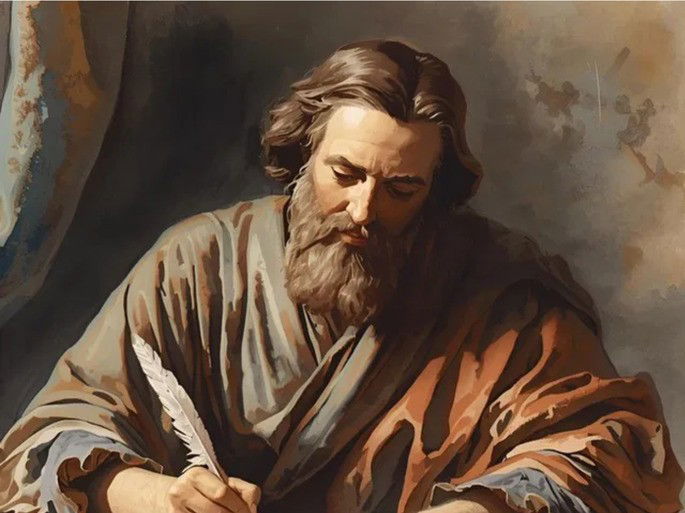
The legacy of Titus is that of a faithful, prudent pastor committed to the truth of the Gospel. He is remembered as a symbol of integrity and dedication in Christian service.
According to ancient Christian tradition, Titus continued his ministry in Crete, where he became the island’s first bishop. He lived to an advanced age and died peacefully in Crete. His life reflects the missionary and pastoral spirit that marked the early years of Christianity.
Bible Study on Titus
Paul’s Letter to Titus
Paul’s Letter to Titus, also called the Epistle to Titus, is one of the three Pastoral Letters of the New Testament, along with 1 and 2 Timothy. It was written by the apostle Paul to Titus, whom he had left on the island of Crete to organize the local church and choose faithful leaders.
The main purpose of the letter is to instruct Titus on how to establish a solid Christian community centered on sound doctrine and good works.
Paul instructs Titus to appoint elders of upright character, to confront false teachers, and to teach Christians to live with sobriety, justice, and godliness. The epistle emphasizes that the grace of God, revealed in Christ, teaches the faithful to reject sin and practice what is good. It also highlights the importance of pastoral authority and the good reputation of Christians before society.
The Letter to Titus is a practical and spiritual guide for Church leaders, emphasizing authentic faith, discipline, and Christian witness as foundations of community life.
Titus and the Early Church
Titus played a fundamental role in the early Church as a close collaborator of the apostle Paul and a leader dedicated to strengthening the first Christian communities. His main mission was to strengthen the churches and ensure that they lived according to the Gospel.
Paul sent Titus on several important missions. One of them was the reconciliation of the church in Corinth, which faced internal divisions, a task Titus fulfilled with zeal and diplomacy. Later, Paul left him in Crete with the responsibility of organizing the local church, appointing elders, and combating false teachings.
Titus’s mission symbolizes the effort of the early Church to establish solid leadership and true doctrine. His work helped structure Christian communities and preserve authentic faith, making him an example of a faithful pastor and servant of the Gospel.
Timothy and Titus: Disciples of Paul
Timothy and Titus were two important disciples and collaborators of the apostle Paul in the early Church. Both played essential roles in the expansion and organization of the first Christian communities.
Paul trusted them deeply, calling them “sons in the faith.” While Timothy mainly worked in Ephesus, Titus was sent to Crete to organize the local church. The so-called Pastoral Letters (1 and 2 Timothy and Titus) reflect the relationship of guidance and friendship between them and Paul, offering instructions on leadership, doctrine, and Christian living.
Together, Timothy and Titus symbolize the continuity of the apostolic ministry and the commitment to preserving faith and order in Christian communities.
Was the Emperor Titus the Same Person as Paul’s Companion?
No. The emperor Titus and Paul’s companion were not the same person. Emperor Titus, son of Vespasian, was a Roman ruler who reigned from AD 79 to 81 and is known for the destruction of Jerusalem in AD 70 during the Jewish-Roman War.
The Titus mentioned in the Bible, however, was a Greek Christian converted by the apostle Paul, a faithful collaborator on his missions and the recipient of the Epistle to Titus. While Emperor Titus was a political and military figure of the Roman Empire, the biblical Titus was a spiritual leader of the early Church, known for his faith and service to the Gospel.
How Did Titus of the Bible Die?
The Bible does not record details about the death of Titus. Early Christian tradition states that he remained on the island of Crete after Paul’s instructions, serving as bishop of the local church in Gortyna. Titus is said to have lived many years dedicated to ministry and the training of Christian leaders.
According to ancient accounts, he died at an advanced age, naturally and peacefully, highly respected for his faith and service. After his death, he was venerated as a saint in both the Catholic and Orthodox traditions.
What We Learn from the Story of Titus
The story of Titus, companion and disciple of the apostle Paul, offers important lessons about faith, leadership, and Christian service.
First, we learn about faithfulness and dedication. Titus was a trustworthy collaborator, ready to carry out Paul’s missions, such as organizing the church in Crete and reconciling communities in difficulty. His life shows that loyalty to the Gospel requires commitment and willingness to face challenges.
Another lesson is the importance of leadership based on character and integrity. Paul instructed Titus to choose trustworthy elders and to confront false teachings, emphasizing that a leader’s credibility and exemplary life strengthen the community.
Additionally, the story of Titus teaches humility and service. Despite holding leadership positions, he remained submissive to Paul’s guidance and focused on the well-being of the church, showing that Christian leadership involves serving others, not seeking status.
Finally, his legacy demonstrates that building and consolidating faith within communities requires patience, prudence, and love for others. Titus is an example of a faithful pastor whose life inspires dedication, integrity, and perseverance in living out the faith.
See also: