 Holy Bible Online
Moses had two sons according to the Bible: Gershom and Eliezer. Both were born from his marriage to Zipporah, the daughter of Jethro, the priest of Midian. Moses’ first son was Gershom, whose name means “foreigner,” because Moses said, “I have become a stranger in a foreign land.” Eliezer was born afterward, and his name symbolizes God’s protection over Moses.
The story of Moses’ sons is mentioned in passages such as Exodus 2:21–22 and Exodus 18:3–4. Moses married Zipporah after fleeing Egypt, following the incident in which he defended a Hebrew and killed an Egyptian. While living in Midian as a shepherd, his sons were born.
Moses’ first son, Gershom, has a name with strong symbolic meaning: “foreigner” or “stranger.” This reflected Moses’ feelings about living far from his homeland, as he said, “I am a sojourner in a foreign land.” His second son, Eliezer, received a name meaning “God is my help,” reminding Moses of the Lord’s protection when he fled from Pharaoh.
Although Moses’ sons do not play major roles in the biblical narrative, they represent the family life of Israel’s great leader. Their descendants are later mentioned among the Levites, showing that even though Moses was the greatest prophet, his family line continued in a humble and quiet way within the history of Israel.
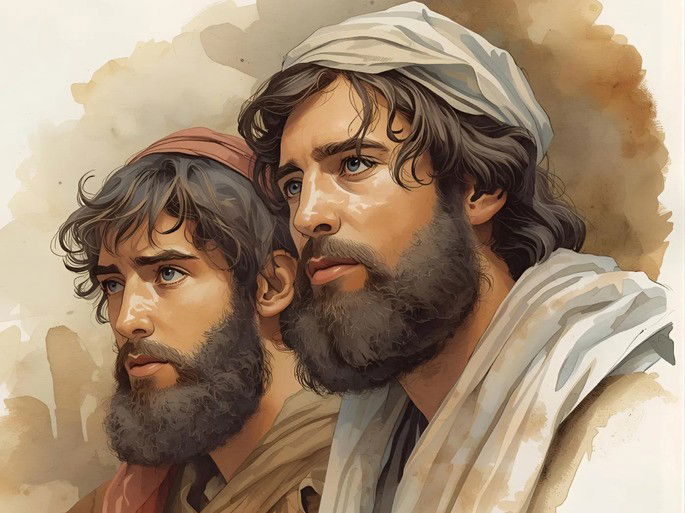
Gershom: Moses’ First Son
Gershom was the first son of Moses and his wife Zipporah. His birth is mentioned in Exodus 2:22, during the time Moses lived in exile in Midian after fleeing from Egypt.
Zipporah gave birth to a son, and Moses named him Gershom, saying, “I have become a foreigner in a foreign land.
- Exodus 2:22
The name “Gershom” comes from the Hebrew expression ger sham, meaning “a foreigner there,” because Moses said, “I am a stranger in a foreign land.” The name reflects the sense of displacement that marked that season of Moses’ life.
The Bible does not provide many details about Gershom’s personal life. However, he became the ancestor of the Gershonites, one of the three main Levitical clans responsible for serving in the Tabernacle (Numbers 3:17–26). His descendants, the sons of Gershom, had specific duties related to transporting and caring for the curtains and coverings of the sanctuary.
Although Gershom himself is not a prominent figure, his descendants played an important role in Israel’s worship and religious organization, preserving the priestly legacy connected to Moses and continued through the Levites.
Eliezer: Moses’ Second Son
Eliezer was the second son of Moses and Zipporah. His birth appears in Exodus 18:4, where the meaning of his name is explained:
and the other was named Eliezer, for he said, “My father’s God was my helper; he saved me from the sword of Pharaoh.”
- Exodus 18:4
The name Eliezer, meaning “God is my help,” expresses Moses’ gratitude for God’s protection when he fled from Egypt after killing the Egyptian who oppressed a Hebrew.
Little is known about Eliezer’s personal life, as the Bible does not describe his direct actions. However, his descendants are mentioned. In 1 Chronicles 23:15–17, it says that Eliezer had a son named Rehabiah, whose descendants became numerous and held leadership roles among the Levites.
Like his brother Gershom, Eliezer belonged to the tribe of Levi, dedicated to religious service and the care of the sanctuary.
Although Eliezer did not play a major role in the biblical narrative, he represents the continuation of Moses’ faith and spiritual heritage. His lineage reflects God’s faithfulness to bless Moses’ household and strengthen his descendants within Israel.
Moses, His Sons, and Their Legacy
Moses, one of Israel’s greatest leaders and prophets was called by God to deliver the Israelites from slavery in Egypt and guide them toward the Promised Land. During his exile in Midian, he married Zipporah, daughter of Jethro, the priest of Midian, and had two sons: Gershom and Eliezer.
Although the Bible does not highlight major deeds from Moses’ sons, their descendants played significant roles among the Levites, serving in the Tabernacle and preserving the spiritual legacy they inherited from Moses.
The story of Moses and his sons represents not only the deliverance of Israel but also the continuation of faith and God’s covenant. This spiritual heritage was passed down through generations as an example of obedience, trust, and faithfulness to the Lord.
See also: