 Holy Bible Online
Ezra was a priest and scribe of the people of Israel who lived during the period of the return from the Babylonian exile, around the 5th century BC. He became known for leading a group of exiles back to Jerusalem, restoring the teaching of God's Law among the people, and guiding a spiritual reform among the Jews who had drifted away from the Lord. His story is recorded primarily in the biblical book that bears his name, with its continuation found in the Book of Nehemiah.
The context in which Ezra appears is that of a people who had been taken into captivity in Babylon because of their sins but who, by God's grace, were beginning to return to the Promised Land. The temple had been rebuilt decades earlier, yet the people were still living far from the Word of God. What was needed was someone who could restore the heart of the nation.
Ezra entered this situation not as a general or a king, but as a man devoted to God's Word. The key to understanding who Ezra was is found in Ezra 7:10: "For Ezra had devoted himself to the study and observance of the Law of the Lord, and to teaching its decrees and laws in Israel." This verse is the heart of his story. The restoration he brought was not one of stones or walls, but of souls and truth.
Ezra belonged to a priestly lineage that traced back to Aaron, the brother of Moses. This meant that he carried not only a religious office but also a historic responsibility: to preserve and pass on the faith of Israel. During the exile, that responsibility became even more significant, because as the people returned, they needed to remember who they were and whom they served.
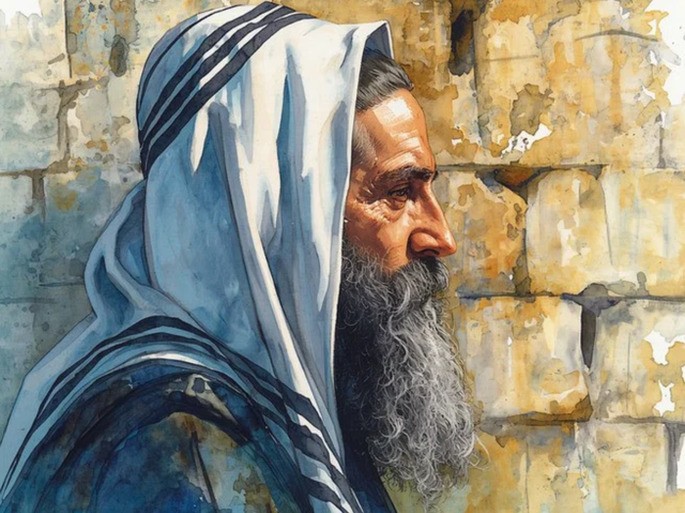
The Book of Ezra is divided into two main sections. The first recounts the return of the first exiles under the leadership of Zerubbabel and the rebuilding of the temple. The second, beginning in chapter 7, introduces Ezra's arrival in Jerusalem with a new group of returnees, bringing with him the Law of God and a mission to teach the people the ways of the Lord. Between these two sections lies a gap of about 60 years, demonstrating that God's work unfolds in stages and according to His timing.
Bible Study on Ezra
Ezra: The Man Who Lived by God's Law
Before considering what Ezra did, it is important to understand what he had resolved in his heart. Ezra 7:10 does not simply say that he was sent to teach; it says that he had devoted himself to studying, practicing, and teaching the Law. Teaching was not merely his duty, it was his commitment. He did not teach because he held a position; rather, he held a position because he had chosen God's Word as the center of his life.
This is an important distinction. Many people know the Bible out of obligation or tradition. Ezra knew it by deliberate choice. It was this decision that made him useful in God's hands. Israel's restoration required someone who not only understood the Law but also lived by it. Teaching that transforms a nation begins with someone who has first been transformed by that teaching.
The Return to Jerusalem: A Journey Under God's Protection
When Ezra received permission from King Artaxerxes I to return to Jerusalem with a group of exiles, he faced a challenge. The journey was long and dangerous, and the group was transporting valuable treasures. The natural solution would have been to request a military escort from the king to protect the people.
However, Ezra had already told the king that the hand of the Lord protected all who trusted in Him. Asking for an escort would have seemed to contradict that testimony before the monarch. Therefore, he called the people to fast together and seek God's guidance and protection for the journey.
The trip lasted about four months, and they completed it safely, experiencing God's protection every step of the way.
This episode reveals something important about Ezra's character: the faith he taught was the faith he practiced. And God honored that faith.
Ezra's Prayer
When Ezra arrived in Jerusalem, he discovered that the people had intermarried with neighboring nations in ways that led them toward idolatry, something clearly forbidden by the Law. What is remarkable about Ezra's response is not harshness, but the depth of his grief. He tore his garments, pulled hair from his head and beard, fell down before the temple, and prayed.
In that prayer, recorded in Ezra 9, he does not position himself as a judge over the people but as one of them. He speaks of "our iniquities," not "their sins." A spiritual leader carries the burden of the people before God. And it was this prayer that helped break the heart of the nation.
As the people saw Ezra lying prostrate and weeping over the sins of the community, they too began to weep. Collective repentance was born from the sincere repentance of one man.
Ezra and Nehemiah: Two Ministries, One Mission
Ezra and Nehemiah are closely linked in the story of Israel's restoration, yet their roles were clearly distinct.
Nehemiah was the governor, the man who organized the rebuilding of Jerusalem's walls and oversaw the city's security and administration. Ezra was the priest and scribe, the man devoted to God's Law, teaching, and spiritual renewal.
They did not do the same work. Nehemiah cared for the stones; Ezra cared for the souls. Nehemiah protected the people from external threats; Ezra shaped them from within through God's Word. Both ministries were necessary. A city without walls is vulnerable, but a city without the Word of God is lost in a different way.
The point at which their ministries come together most clearly is found in Nehemiah 8, a passage that deserves special attention. There, the physical restoration of Jerusalem and the spiritual restoration of the people meet in a powerful moment of renewal.
Learn more about Nehemiah.
Nehemiah 8: The Day God's Word Returned to the Center
After Jerusalem's walls were completed, the people gathered in the square before the Water Gate and asked Ezra to bring the Book of the Law of Moses. It was the seventh month, a sacred month in Israel's calendar.
Ezra opened the book, and all the people stood. He read from dawn until noon, while the Levites explained the meaning of what was being read so that everyone could understand. As they listened to the words of the Law, the people began to weep. But Ezra, Nehemiah, and the Levites told them not to mourn, because that day was meant to be a day of joy. "The joy of the Lord is your strength." This is one of the most moving moments in Scripture.
A people who had spent decades in exile, separated from their land and their identity, were hearing God's Word read aloud in their own city, in the square of their rebuilt Jerusalem. And they wept, not merely out of sorrow, but because they understood.
Nehemiah was the governor. Ezra was the reader and teacher of the Law. Together they presided over the greatest restoration possible: the restoration of a people who were rediscovering who they were and to whom they belonged.
The Legacy of Ezra
Jewish tradition attributes an even greater role to Ezra than what is explicitly described in the biblical books. Many scholars regard him as having played a key role in gathering and organizing the Hebrew Scriptures, preserving Israel's written heritage for future generations.
Ezra demonstrated that a nation's spiritual crisis cannot be solved merely through structure, organization, or physical security. It is resolved when God's Word returns to the center. When someone chooses to study it, practice it, and teach it as Ezra did restoration begins from the inside out.
Israel returned to the land under Zerubbabel. The temple was rebuilt. The walls were restored under Nehemiah. But through Ezra's ministry, the people once again became truly Israel, a nation that knew God's Law, was moved by it, and committed itself to obeying it.
What We Learn from Ezra's Life
True restoration begins with the Word of God. Ezra did not arrive in Jerusalem with an army, political power, or extraordinary resources. He came with the Law in his hands and a firm decision in his heart: to study it, practice it, and teach it. That order matters. Ezra did not teach what he had not first lived.
We also learn that a spiritual leader carries the burden of the people as his own. When Ezra discovered Israel's sin, he did not point fingers, he fell to his knees. He prayed, saying, "our iniquities." It was this posture of humility that softened the hearts of the people and opened the way for collective repentance.
Ezra reminds us that an entire generation can be transformed when someone chooses to take God's Word seriously above all else. A position, platform, or title is not required. What is required is a decision like the one Ezra made and the willingness to live out what one believes.
See Also: